
Album Reviews |
The Grateful Dead
Three group compositions are present, ‘The Golden Road’, ‘Cold Rain And Snow’ and ‘New New Minglewood Blues’. Elsewhere, Garcia writes ‘Cream Puff War’ and the remainder of the five cuts are cover versions. Almost every track sounds like the band were tense, an explanation for which can be drawn by reading the grateful dead discography on their official site, a quote from Jerry Garcia himself, “So we went down there and what was it we had, Dexamyl? Some sort of dietwatcher's speed, and pot and stuff like that. So in three nights we played some hyperactive music.” Right. The album certainly sounds like a band playing in a studio, simple as that. It’s a very fresh and clean sounding record, fairly simple and accomplished r n b tunes, heavily blues influenced. ‘Golden Road’ opens the album and was apparently included after Warners insisted they went away and write a single. It’s a decent tune with a speedy little guitar solo, but it wasn’t likely to be commercial enough to propel The Dead into the charts alongside Jefferson Airplane. ‘Beat It On Down The Line’ is taken at a breathtaking pace, and it’s this pace that gives the album as a whole it’s drive and most interesting aspect. The group may well have been on speed, yet it gives the impression they were desperate to get into the studio and enjoy themselves, show what they could do. The first longer tune on an album short of longer tunes arrives with ‘Good Morning, Little Schoolgirl’, excellent harp work is a feature. Other highlights include the Garcia tune ‘Cream Puff War’, swirling organ work, excellent little guitar solo, an impassioned vocal. It’s entertaining and pleases the ear. It’s not complicated, but it’s good music. The Other One makes it immediately clear that Grateful Dead have got better. Production touches give the song more of a psychedelic edge than it otherwise would have had, although these productions tricks seem to be in place instead of potential jams. Listening to a live version of ‘The Other One’ from ‘Two From The Vault’, the jams are all there and the song extended to some fifteen minutes. It’s difficult, isn’t it? With some 4000 Grateful Dead shows available free as streams on the net, with Grateful Dead fans rarely agreeing with each other let alone certain critical appreciation of their beloved group, what ‘point’ or ‘purpose’ becomes clear from listening to their official output? Well, I’m going about this release by release, with the majority of ‘The Vault’ series thrown in for good measure. Dicks Picks? What, I want to review another 36 and counting Dead live albums as well as everything else? I’ll get back to you. Anyway, where was I? Ah, yes! ‘The Other One’, I can safely say this is the song that’s impressed me most in my journey with The Dead so far. This is proper psychedelic music with very nice vocals, good lyrics and a decent, attractive tune. Fans of all psych music can safely apply, ‘The Other One’ is certainly a good example of the genre. Double CD vault release featuring music from August 24, 1968. Nine songs, only four of which had been presented on either of the first two Dead albums proper. 'Good Morning, Little Schoolgirl' runs for 15 minutes plus. It's a very simple tune, an easy on the ear blues figure. Very easy to also add an extra nine minutes to the studio original and Grateful Dead go off into jamming mode. Self indulgent probably, but I for one can listen to this blues piece all day, especially with strong vocals as a bonus. I enjoy listening to 'Morning Dew', excellent guitar work, as expected. Perhaps the finest thirty minutes (!) contained on the album however is 'The Other One' and 'New Potato Caboose'. I'm still early in my journey with The Grateful Dead, yet listening to these live cuts and this entire live album, the moments where the guitar solo arrives. The band wind themselves up, you can hear them mount the tension, and then it's relieved in a blissful, excellently impressively played solo or other? Well, that's my primitive take on it, so far. Anyway, back to 'The Other One' and 'New Potato Caboose'. I already adore the melodies of 'The Other One', extended to nearly sixteen minutes thanks to more impressive jamming, I like it even more, actually. 'New Potato Caboose' is a little messy, but this is controlled mess. Um.... well, a studio piece with psychedelic studio effects and trimmings can't help but sound more natural when played live. The bits we miss aren't missed and we gain an extended Grateful Dead wigout to close, with everyone sounding like they're about to explode. The Grateful Dead were heavily in debt to their record label by now, yet with 'Live/Dead' already in the can, were given some leeway to create and indulge during the 'Aoxomoxoa' sessions. One of the worlds very first 16 track studios appeared and the dead basically re-recorded the album playing around with the full 16 tracks. This has resulted in a little indulgence here and there, but said indulgence is balanced out by some of the more forceful performances and clearly concise writing the dead had put down in the studio until this stage. A quick note, actually. All CD issues of 'Aoxomoxoa' date from a 1971 re-mixing session, the original vinyl mix being lost in the mists of time. Apparently the original vinyl mix is a bit more all over the sonic spectrum and all sorts of unholy gimmick noises attempt to spice up the unspiceable, eg, 'What's Become Of The Baby', more of which later. On the whole, this strangely but utterly appropriately titled album reveals the dead putting more thought into their song-writing, much of which is a result of increased collaboration between Garcia and lyricist, Robert Hunter. You know, for a start, The Greatful Dead suddenly acquire a sense of humour. Subtle and stoned humour, but the likes of 'Dupree's Diamond Blues' and 'Doin' The Rag' are grin inducing, rather than just confusing, as per certain Grateful Dead of yore. Anyway, four of the first five songs on this LP ( side 'a' ) are magnificent to merely good. Of the remaining three songs, one is an atrocity, one merely ok and the other a brilliant Greatful Dead gem. Still, any weakpoints are really going to hurt you when the album overall is only thirty-nine minutes long and ten of those minutes are really rather irritating. Irritating song number one, then? Well, 'Rosemary' would make a rather nice three or four minute song if it were properly developed and actually had a tune. As it is, even what charm it does posses is drowned and buried by an effect on the vocals. You know, "Hey! Let's use this groovy new studio to make the singer sound like a sheep!!". As for 'What's Become Of The Baby', all eight horrifying minutes of it, removing the effects from the original vinyl mix of this tune leaves just a drowned, eerie sounding droning vocal you can barely hear. For eight mind-numbing minutes. Well, we needed something of weight to balance out 'China Cat Sunflower' and 'Cosmic Charlie', but this? I really wanted and needed to get into the start of this album. It would be very easy to dismiss ‘Dark Star’ as a pointless twenty minutes of noodling, ‘St Stephen’ as a immeasurably mediocre live rendition and ‘The Eleven’ as an stirring, if futile, jam. Very easy to dismiss? Well yes, because I’ve just done it. I don’t believe a word of it now, though. Why? Well, ‘get into’ the start of this album, I have indeed. ‘Live Dead’ was presented to a listener in 1969 as a concise slice of The Grateful Dead live experience for those who hadn’t heard it. Do you need drugs to get the full effect? Well, not really, no. You just need one time, just the one time, where a space is cleared in your head and you can really listen with no interruptions to ‘Dark Star’ in particular. So, with all the lights switched off last night, I placed my headphones on and listened. I went through the entire album and ‘Dark Star’ suddenly emerged as this wondrous piece of magic. A piece of magic indeed that the entire album hangs upon for it to work at all. Without ‘Dark Star’ the remaining five tracks if taken as an album on their own wouldn’t form anything legendary or substantial. Well, obviously, as the ‘Dark Star’ / ‘St Stephen’ / ‘The Eleven’ medley ( if you will ) provides a good half of the album and needs to be listened to all in one go. In these crazy, terrorist infected times, how often does anybody get the chance to listen to over 30 minutes of music in one go and actually be able to concentrate fully on that and nothing else? We have jobs, college, wives, children. Well, you get my drift. In the age of Scissor Sisters, is there any place for twenty minute jams from The Grateful Dead? Radical shifts occuring in the world. Concise Grateful Dead songs? What's that all about? A Grateful Dead album with good vocals? The previous albums, including 'Live/Dead' had all been about translating the live experience onto vinyl. 'Workingman's Dead' is actually a proper album containing proper songs properly written! I enjoy those early albums though. This is a bit of a radical sea-change for the band and does take a bit of getting used to. It's mentioned in every review, so i'll mention it as well, but 'Uncle Johns Band' is clearly influenced by Crosby, Stills and Nash. Indeed, the ever generous David Crosby tutored a few of the Dead guys in the art of the vocal harmony. His lessons have surely payed off. The harmonies aren't as tight or smooth as CSN, yet that would detract from the loose acoustic charms and shifting patters of a song such as 'Uncle Johns Band'. It's a song for all seasons, perfect in sunshine though. It's a very happy tune from a seemingly happier band. Also pleasing is the running time, around thirty five minutes spread across a mere eight songs, not a one of them wasted. Everybody sing-a-long country pedal-steel style, Don't murder me goes the great 'Dire Wolf'. The dead have plugged into very different influences for 'Workingman's Dead' but also kept their love of the blues and rhythm and blues. The softer acoustic approach actually only further serves to highlight the quality of the bands playing. The album has a fairly sparse sound, it's not in your face, but everything that's here seems to be here for a good reason. I like that. It's almost like Dylan switching to 'John Wesley Harding' after 'Blonde On Blonde' is 'Workingman's Dead'. Cut from the same cloth as 'Workingman's Dead' and very much a companion piece. The sound seems fuller this time around though and the harmonies are more prominent as well. It's a good example of The Grateful Dead working as a collective, a couple of the best tunes actually arriving from outside the Garcia/Hunter axis. Phil Lesh provides us with 'Box Of Rain' and Bob Weir 'Sugar Magnolia'. The record sounds like Grateful Dead have been listening to latter day Byrds, to The Eagles and most importantly, to Crosby, Stills and Nash. 'American Beauty' compares favourably with the Crosby, Stills and Nash debut record which came out a year earlier. This isn't an album that will scream 'classic' at you straight away. Although the songs appear straightforward enough on a first glance, there's more than first meets the eye going on underneath. Repeated listenings reap rewards, particulary an appreciation of the playing, very clever guitar lines that don't scream hook or melody and vocal lines that are smooth, in harmony or solo. The songs don't seem to have been built as rather pieced together from fragments in the air. If the Altamont free concert had marked the end of the hippie dream, Grateful Dead provide us with comfort in the aftermath. The Hells Angels were used on the recommendation of Grateful Dead, after all. Yeah, they wanted to call this live LP 'Skull Fuck' so it emerged under the name Grateful Dead because record companies are generally well known for their imagination. The songs are taken from a variety of live shows the band recorded/performed April 1971 and the album was released that same year. Releasing a live LP was also of course a neat way to get over the problem of how to artistically follow 'Workingmans Dead' and 'Anthemn Of The Sun'. Superbly played country-folk-rock is the order of the day for the most part and a double live LP was seen as good value and it also sold well into the bargain - a few well chosen cover versions no doubt aided this. The polished sound and lack of upfront audience feedback present on the disc is largely due to the mixing and studio-overdubs - some of which were to the detriment of Pigpen who was suffering ill-health at the time and I guess had a few performances the group wanted to enhance or improve upon. Otherwise, the guitars of Jerry and Bob and the bass of Phil Lesh combine well and the drumming by Bill Breutzmann is impecabble throughout. 'The Other One' is the side-long monster of the LP, around half the running time is taken with jamming and a five minute drum solo - but it's well done jamming. The earlier part of this LP feels fairly pedestrian until the guitar player really enriches 'Big Railroad Blues'. The songs upto 'The Other One' however could be latter day Byrds, or The Eagles. Any number of good live bands that were around back in the day - like the vocal harmonies during 'Playing In The Band' - but 'Little Feat' on this evidence alone, were a better band.
The Grateful Dead
Albums

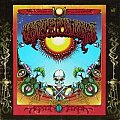
The Grateful Dead 7½ ( 1967 )
The Golden Road (To Unlimited Devotion) / Beat It On Down The Line / Good Morning, Little School Girl / Cold Rain and Snow / Sitting On Top Of The World / Cream Puff War / Morning Dew / New, New Minglewood Blues / Viola Lee Blues
A popular critiscm of this debut seems to be that it’s not representative of The Grateful Dead and what they later became. That’s like criticizing ‘Please Please Me’ by The Beatles for not sounding like ‘Sgt Peppers’ or ‘Abbey Road’. True, this collection of mostly short blues based rock n roll tunes isn’t what the band became and isn’t terribly representative of the shows the group were doing at the time. Only one tune extends beyond ten minutes, the pleasing album closer ‘Viola Lee Blues’. The solo spots in ‘Viola Lee Blues’ again impress and convince and this tune alone, even if you weren’t impressed at all with the rest of the album, should be enough to provide a listener with hope for the rest of the bands catalogue. Overall, this is a decent album, flaws included, very listenable and nice. I never seem to skip any of the songs, in itself a notable aspect of the album.
Add A Comment? Readers Comments
Mike Harrison cathairball5000@yahoo.com
I'm definitely not a fan of the Dead and can think of more bad than good regarding their entire recorded output. But the following statement is probably the ONLY other time I'll defend the Dead when I'm not discussing AOXOMOXOA, WORKINGMAN'S DEAD and AMERICAN BEAUTY: most of the songs don't last more than 3 minutes, the Dead sound like a garage band for this album only, and with the exception of the very boring "Viola," they get it over with. I like short, fast, and to-the-point music. So, to my ears, it's one of the more CONCISE albums in the Dead's catalog!!!
Stephen Stephendfall@yahoo.co.uk
I'm delighted that someone else likes this debut. I think it's really under-rated. Yes, it lacks the improvised space-rock 'lift-off' factor the band are famous for, but they play so well and it's actually pretty psychedelic. It doesn't sound much like their later work, and this makes it a special album in many ways. I also like the fact that they went from this into Anthem Of The Sun: quite a leap.
kaczmar kaczmar_joe@hotmail.com
This album is fantastic!
as the first comment mentions, its very 'to the point' music, with exceptions of "Viola Lee Blues", and I love every bit of it

Anthem Of The Sun 8 ( 1968 )
That's It For The Other One: I. Cryptical Envelopment II. Quadlibet For
Tender Feet III. The Faster We Go, The Rounder We Get IV. We Leave The Castle / New Potato Caboose / Born Cross-Eyed / Alligator / Caution (Do Not Stop On Tracks)
As for the rest of the ‘Anthem Of The Sun’ LP? Well, it’s patchy. Recordings apparently taken from a combination of studio and live sources, it’s clear listening to the record that some severe ( and/or poor ) editing has taken place. A certain shorter song ( ‘Born Cross-Eyed’ ) appears to have been taken from something else, with no apparent proper start or end, or indeed, reason to be other than to fill the grooves. None of the extended ( read 7/8/9 minutes and 1 eleven minute track ) pieces completely satisfy, although ‘The Other One’ perhaps comes closest of all. Even then, ‘The Other One’ simply tails off rather than ends, as if the band either didn’t want to end it there and merely faded it out to keep it within reasonable length for a vinyl LP. The differences between live and studio Grateful Dead are very clear, the restrictions of the studio and the medium they were recording for, very apparent. ‘Anthem Of The Sun’ still manages to move the group forwards from their self-titled debut. There are more ideas here, the recording sounds better and a satisfying listen is had. The album withstands repeated listens, flaws ( read the aimless closer ‘Caution….’ ) and all. It’s a document of its time, sure. The production gimmickry and the editing between sections of songs grate, the unsatisfying ending to almost every song grates, yet the ideas and playing touches contained within are enough on their own to rise above any flaws the album has. It’s a fascinating album and I like it quite a bit.
Add A Comment?Readers Comments
Mike Harrison cathairball5000@yahoo.com
I would say that ANTHEM is one of the more interesting albums in the Dead's catalog because of the unusual live/studio mix. If you were around in 1968, you rarely heard live and studio tracks mixed together, fading from one to another. It was a pretty cool effect for its time. I would also say "Nice try, Dead!" I wouldn't give it an 8 exactly BECAUSE of the schism between their live work and their studio work. Actually, they didn't really have a good handle on either in 1968......some of the live stuff on ANTHEM just doesn't go anywhere, but at least they sounded interested in what they were playing. But the studio work sounds more diffuse.....it's not bad, but you can tell that they weren't comfortable in the studio, and the lackadaisical performances prove it. I have to wonder if they mixed the live music with the studio stuff because they couldn't come up with enough decent material from either side! I think they proved their worth later on, especially in the stud! io with WORKINGMAN'S DEAD and AMERICAN BEAUTY. I'll even concede that some of their live material from the early 70s could be interesting when they threw some unexpected elements (jazz, maybe) into their blues/country stew. But in 1968, the Dead were stumbling around, and no amount of potent ganja could hide their mediocity! ANTHEM really isn't a bad album, but there was better music in them.
Two From The Vault 8½ ( 1992 )
Good Morning, Little Schoolgirl / Dark Star / Saint Stephen / The Eleven / Death Don't Have No Mercy / The Other One / New Potato Caboose / Turn On Your Lovelight / (Walk Me Out In The) Morning Dew
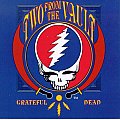
Switching back to the first disc, 'The Eleven' impresses the most. After a tentative 'Dark Star' and a fairly innocuous 'St Stephen', 'The Eleven' is the sound of The Grateful Dead in full flow, sounding more astonishing to the ear than anything either of the first two albums presented. I like jamming, I like guitar solos. I also like two minute punk songs, the opposite of Grateful Dead, if you like. Yet, having listened to many hours of Frank Zappa jamming and extending and pushing a solo out at you, The Grateful Dead doing something similar ( yet the methods both artists used were vastly different, I feel ) is hardly going to phase me. 'The Eleven' sounds like three or four tunes melded seamlessly together. Taken in isolation, I can imagine a virgin Grateful Dead listener being fairly appalled at this apparent self-indulgence and the fact that if you skip three or four minutes in the tune, you end up in a section that sounds, more or less, exactly like the previous one. Well, until the final third, where the guys wig out a little and do whatever the hell they like, yet they still hold it together. There's a strong rhythm section clearly, that allow the lead players the freedom to explore within a song. Lots of jazzy elements to the sound, also. Taken in context, as part of an LP and part of this concert, 'The Eleven' makes absolute sense and totally works. I'll wind up the review about now. Although I prefer this record to either of the first two LPs, i'd actually probably recommend you just go out and buy all three. Make sure you listen to them in order. That way, this album will make a lot more sense, because hopefully you'll have picked up of the dead's myriad influences and potential, by then. Ah, a final word for the excellent blues of 'Death Don't Have No Mercy'. A final word? Soul.
Add A Comment?
Aoxomoxoa 8 ( 1969 )
St Stephen / Dupree's Diamond Blues / Rosemary / Doin' That Rag / Mountains Of The Moon / China Cat Sunflower / What's Become Of The Baby / Cosmic Charlie
So, we ignore 'What's Become...' and 'Rosemary' and imagine this is a 31 minute long LP. Now, a 31 minute long 'Aoxomoxoa' would be nearly flawless, at least within it's own fairly limited ambitions. 'St Stephen' is a cracking tune, especially when the band freak-out briefly towards the end of the track. 'Dupree' is a silly little thing with very silly lyrics, but it's lots of fun. A very dylan-esque piece it's always seemed to me, especially with bootlegs and tapes of Dylan's 67 recordings doing the rounds at the time. 'Mountains Of The Moon' is almost beautiful, not a word readily associated with 'the dead' at the time. 'China Cat Sunflower' is sheer glory from beginning to psychedelic pause in the middle through to the wonderful three or four minutes or so reprise to end. Obviously, with 'What Becomes Of My Baby' and to a lesser extent 'Rosemary', 'Aoxomoxoa' is a fairly inconsistent album though and can't have seemed to be great value for money upon original release. Still, 'St Stephen' and 'China Cat Sunflower' really do show off The Greatful Dead' at their finest. Superb bass-playing all through 'China Cat Sunflower', for example. Great guitar throughout pretty much the entire LP.
Add A Comment?
Live/Dead 8½ ( 1969 )
Dark Star / St. Stephen / The Eleven / Turn on Your Love Light / Death Don't Have No Mercy / Feedback / And We Bid You Goodnight
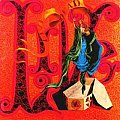
Thankfully, yes. Well, in our house, at least. The ebb and flow and delicious guitar of Jerry Garcia washes over and builds upon itself creating an almost hallucinogenic effect. Hallucinogenic? Hardly needs stating, does it? Well, it does actually. Because the studio albums don’t provide such an effect. The casual Dead listener may just have ‘Workingman’s Dead’ and ‘American Beauty’. I mean, if I was casually curious about a band, I wouldn’t tend to start my listening adventures with a live outing, even a said band with the live reputation of Grateful Dead! The ‘St Stephen’ and ‘The Eleven’ part of ‘the medley’ contains much impressive playing, even if ‘St Stephen’ is somewhat dwarfed by the two mighty pieces that surround it. ‘Turn On Your Lovelight’ is a fun blues piece with lots of drum solos. ‘Death Don’t Have No Mercy’ is the sound of weeping guitar, cliché over and done with. The closing acapella piece is suitable and there you have it. An album for all seasons! Of course it’s not perfect, almost everything The Dead did was blemished in some small way, but as a live album it’s dandy. It sinks into you very well and deserves an 8.5 at least.
Add A Comment?
Workingman's Dead 8½ ( 1970 )
Uncle Johns Band / High Time / Dire Wolf / New Speedway Boogie / Cumberland Blues / Black Peter / Easy Wind / Casey Jones
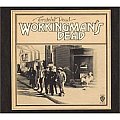
You know, a song like 'Casey Jones' isn't all that different from 'Doin That Rag' from 'Aoxomoxoa'. I mean, the lyrics particularly are vastly improved. The pedal-steel cutting through is nice. It's lighter than Dead tunes of yore, yet clearly coming from the same well of inspiration. It's a groovy little tune, anyway. Songs such as 'Cumberland Blues' and the lovely 'Black Peter' tell a story. They seem to mean something more, that's down to Hunter, I guess. Nice little album, is all I can say. It's really easy to listen to any time of the day, which is a rare quality. It's not perfect, but then again, what is? It was only the 1st new studio set the guys would release in 1970, anyway.
Add A Comment?
American Beauty 9 ( 1970 )
Box Of Rain / Friend Of The Devil / Sugar Magnolia / Operator / Candyman / Ripple / Brokedown Palace / Till The Morning Comes / Attics Of My Life / Truckin'
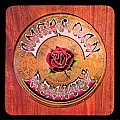
'Attics Of My Life' reminds me of The Byrds singing 'amazing grace' live at their concerts, it certainly sounds spiritual enough to remind me of that. The song could be said to drag, but it fits perfectly on the album. Back to the opener, 'Box Of Rain', what a fantastic composition this is. It's a song you can listen to over and over and for the five minutes eighteen seconds it's on - time doesn't seem to exist. It really can envelop you and without statements, nothing else matters. 'Sugar Magnolia' reminds me slightly of Little Feat, the way the tune seems to bend. I like tunes that bend. A real star on display though, as if those two songs weren't enough, is the amazingly good 'Ripple'. It's just acoustic guitar, another guitar, soft bass that's almost not there and percussion. It's a sweet song with words like a painting. It's got a 'la la la' section of vocals and really timeless melodies. Sigh. On the album, I love the way it doesn't so much finish as just flow straight into 'Brokedown Palace' which reminds me of Gram Parsons era Flying Burrito Brothers. 'Brokedown Palace' can only ever be said to have soul. The uptempo group composition 'Truckin' closes the album, an album for all moods. It'll make you smile and at forty two minutes long, everyone has enough time in their lives to make room for this particular American smile.
Add A Comment?Readers Comments
Stephen
Friend Of The Devil is a pretty song, which Bob Dylan has also performed well on his Never Ending Tour. People tend to rave about the Grateful Dead as a live band, and quite rightly so, but this studio album is very enjoyable.
GAZZA
Im hardly a huge grateful dead fan but i listen to this on occasion . It reminds me of the byrds and the burritos in places . i guess california in the late 60s was a special place musically . The harmonies and playing are nice and i really like "box of rain" "friend of the devil" and in particular the hymn like qualities of "attics of my life" and "brokedown palace" . But "ripple" reminds me of the horrific "any dream will do" in places and i dont feel compelled to buy any of the other albums so 6/10 from me .
Grateful Dead 7 ( 1971 )
Bertha / Mama Tried / Big Railroad Blues / Playing in the Band / The Other One / Me & My Uncle / Big Boss Man / Me & Bobby McGee / Johnny B. Goode / Wharf Rat / Not Fade Away - Goin' Down the Road Feelin' Bad
'Big Boss Man' is a dull blues number, 'Me And Bobby McGee' a dull country number and as for 'Jonny B Goode' - well, Rock And Roll revivals were dull even in the early Seventies - or was it simply too soon? Either way, they play too many notes for this to be convincing Rock n Roll. 'Wharf Rat' has nice atmospheres - as actually, the whole album does. I can totally understand why this album did well back in the day - watching the record go round and round on the turntable in the American sunshine. It's mood music, but the mood in the UK was Glam Rock and the streets were dirty and grey. We couldn't, best as we wanted to, merely chill out to a double-album of country rock. Still, Buddy Holly gets the twiddly guitar treamant throughout the closing medley - something that manages to be hypnotic. Grateful Dead could do that, noodle and nurdle away endlessly around average material yet managing to make it sound utterly great. Wait! Buddy Holly wasn't average material, yet they take a few melodic strands, play the song then endlessly fade away deliciously.
Add A Comment?
this page last updated 31/8/15
Channel Youtube |
Contact Us |
Find New Music |
Features |
Music & Web Apps |
Ratings At A Glance
Singles Bar |
Top 100 Albums |
Top 100 Songs |
